20 May 2026
What is IBAN? Format, Structure & How It Works
An IBAN is the standard format for identifying bank accounts in international transfers. Learn what it looks like, where to find yours, and how it differs from SWIFT, BIC, and SEPA.
Understanding how global banking works is essential in a world where cross-border payments are common. This guide explains the role of standardized account identifiers and why they matter for international transfers. You will learn how they function, where to find them, and how they differ from other banking codes.
The purpose of this article is to clarify how an IBAN is used in everyday financial operations, especially when sending or receiving money internationally. It also explores related systems such as SWIFT and SEPA, helping readers avoid confusion and costly mistakes when transferring funds.
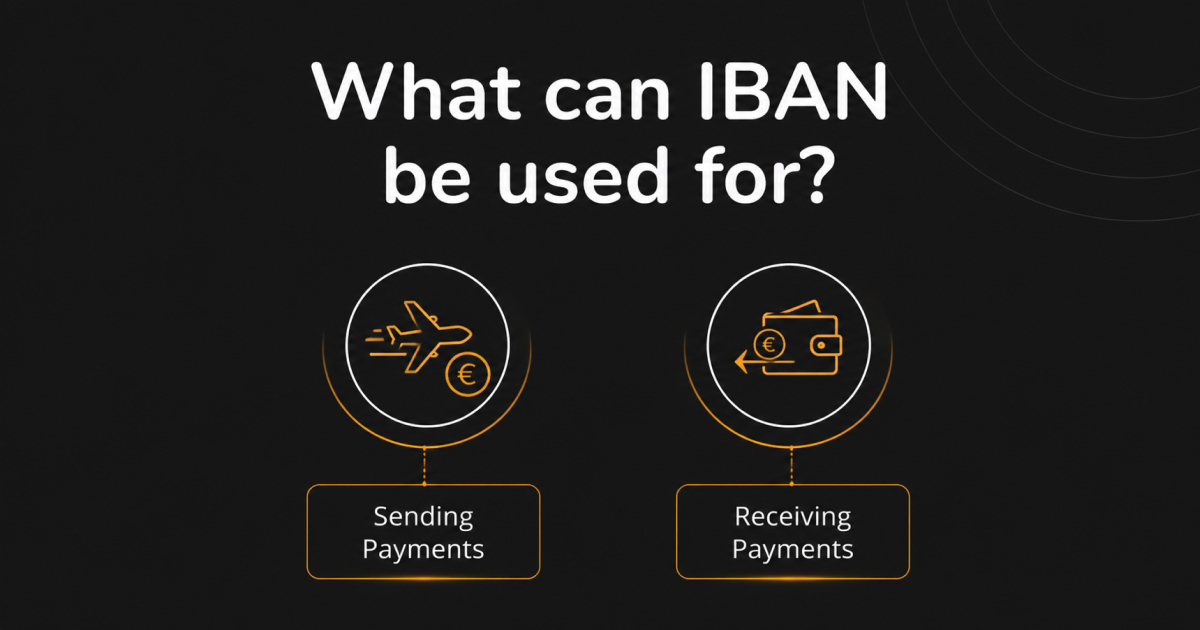
What can an IBAN be used for?
An IBAN is a standardized format used to identify bank accounts across international borders. It ensures that payments are routed accurately between banks, reducing errors and delays. This system is widely adopted across Europe and many other regions, making it a key component of global finance.
The international bank account number allows banks to verify account details before processing transactions. It acts as a safeguard, ensuring that funds reach the correct destination without unnecessary complications.
A typical IBAN account number is used in the following scenarios:
- Sending money overseas, where accurate routing is essential for timely delivery
- Receiving money from overseas, ensuring funds are credited to the correct account
These use cases highlight the importance of IBANs in modern banking. In the next section, we will look at how these identifiers are structured and what information they contain.
What does an IBAN look like?
An IBAN can contain up to 34 alphanumeric characters, depending on the country. Its structure varies globally, reflecting differences in banking systems. For example, IBANs in Germany are 22 characters long, those in the UK are 22, and those in France are 27. Countries like Canada and the United States do not use IBAN, but rely on alternative systems.
A typical IBAN number example from Germany might look like: DE89 3704 0044 0532 0130 00.
Each IBAN number is made up of several key components:
- Country code: Identifies the country where the account is held
- Check digits: Used to validate the accuracy of the entire sequence
- Bank identifier code: Specifies the financial institution
- Branch code: Indicates the specific branch of the bank
- Account number: Represents the individual customer account
This structure ensures that every IBAN is unique and verifiable, which minimizes the risk of payment errors.
Where to find your IBAN?
Locating your IBAN is usually straightforward. Most banks provide it clearly in their digital and physical documents. You can access it quickly without needing to contact customer support.
Common ways to find your details include:
- Logging into your online banking platform and viewing your account information
- Checking your bank statement, either printed or digital
- Using your bank’s mobile app, where account details are displayed
If you are preparing for an IBAN transfer, always double-check the number before sending funds. Even a small mistake can lead to delays or failed transactions.
Sepa, SWIFT codes, BIC, and IBAN – what’s the difference?
International banking involves several systems that work together to facilitate secure and efficient payments. While IBANs identify accounts, other codes help identify banks or payment networks.
Understanding the IBAN number in relation to these systems makes it easier to navigate international transfers and choose the correct details when making a payment.
IBAN vs BIC
A BIC, or Bank Identifier Code, identifies a specific bank rather than an individual account. It is often used alongside IBANs for international payments.
The key differences between IBAN vs BIC include:
- IBAN identifies the account, while BIC identifies the bank
- IBAN is mandatory in many regions for transfers, while BIC may be optional in some cases
- IBAN ensures accuracy of the destination account, while BIC ensures the correct institution is selected
Together, they provide a complete picture for secure transactions.
IBAN vs SWIFT Code
The SWIFT system is a global messaging network used by banks to communicate payment instructions. A SWIFT code is often the same as a BIC.
When comparing IBAN and swift code, the main distinctions are:
- IBAN specifies the exact account, while SWIFT identifies the bank within the network
- IBAN is used primarily in Europe and partner countries, while SWIFT operates globally
- SWIFT facilitates communication, whereas IBAN ensures correct account routing
Both are typically required for international wire transfers.
IBAN vs SEPA Code
SEPA, or the Single Euro Payments Area, simplifies euro transfers within participating countries. It is not a code but a payment framework.
When looking at IBAN number usage within SEPA:
- IBAN is required for all SEPA payments
- SEPA defines the rules and standards for transfers in euros
- IBAN ensures the payment reaches the correct account within the SEPA system
This combination allows for fast and low-cost transfers across Europe.
Conclusion
IBAN plays a central role in modern banking by standardizing how accounts are identified across borders. They reduce errors, improve transaction speed, and make international payments more reliable for individuals and businesses alike.
Understanding how an international bank account number works helps you avoid common mistakes and ensures smoother financial operations. Whether you are sending money abroad or receiving funds, using the correct details is essential.
By recognizing how the IBAN number interacts with systems like SWIFT, BIC, and SEPA, you can confidently manage cross-border payments and choose the right information for every transaction.
FAQ
Is it safe to share your IBAN?
Sharing your IBAN number is generally safe, as it is designed to be used for receiving payments. However, you should only provide it to trusted parties and avoid sharing additional sensitive banking details unnecessarily.
What happens if I enter the wrong IBAN?
If an incorrect IBAN is entered, the transfer may be rejected or sent to the wrong account. Banks often perform validation checks, but errors can still lead to delays or additional fees.
How much does it cost to send money with an IBAN?
The cost depends on your bank, the destination country, and the transfer method. Some banks charge fixed fees, while others apply currency conversion margins or intermediary charges.


Choose Your Path: Personal or Business Accounts
Whether you're looking to manage your personal finances or enhance your business operations, our platform has the right solution for you. Select a Personal Account for intuitive money management or a Business Account to empower your enterprise with advanced financial tools.