Company News
What Is a Tax Identification Number in the UK and Where to Find It
Foreign banks and payment providers often ask for a TIN, yet the UK does not issue one under that name. We explain which number to give, where to find it and why the form asks.
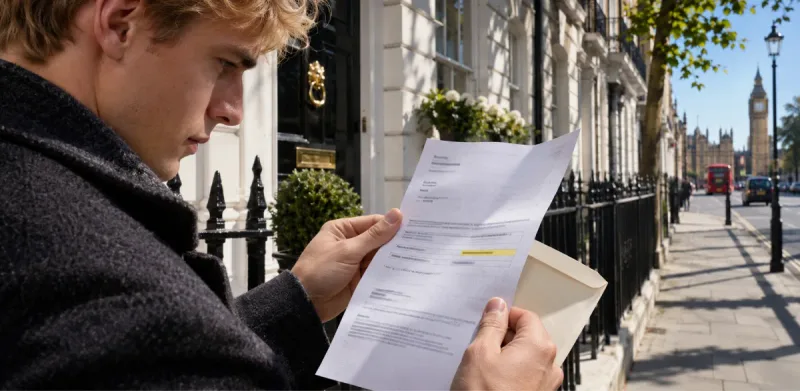
In the UK, there is no number officially called a tax identification number. On forms from foreign banks and payment providers, UK individuals usually give their National Insurance number, while companies, partnerships and trusts give their Unique Taxpayer Reference (UTR). You can find both on HMRC documents, in the HMRC app or in your online account.
Why the UK Has No Single Tax Identification Number
A tax identification number (TIN) is a unique number, or combination of letters and numbers, in a set format that a country issues to identify a taxpayer. That is how HM Revenue and Customs (HMRC) defines it. The UK does not have one number with that name; instead, several numbers do the job depending on who the taxpayer is and what the report is for.
For the Common Reporting Standard (CRS), the international system for exchanging information on financial accounts, HMRC says that for most individuals in the UK the TIN is their National Insurance number (NINO). For organisations that file tax returns, the OECD's UK TIN sheet lists the 10-digit UTR.
Other reporting rules use different numbers. For digital platform reporting, HMRC names the NINO for individuals, the Company Registration Number (CRN) for companies and LLPs, and the UTR for partnerships and trusts. So the practical answer to "what is my TIN number in the UK" is: check which number the form asks for.
Which UK Number to Give as Your TIN
On a tax residency form from a foreign provider, the UK tax identification number you give usually depends on who you are:
| Who you are | Number usually given | Format | Issued by |
|---|---|---|---|
| Individual tax resident in the UK, including employees and freelancers | National Insurance number | 2 letters, 6 numbers, 1 letter | HMRC |
| Sole trader | National Insurance number; some forms also ask for your personal UTR | NINO as above; UTR is 10 digits | HMRC |
| Limited company | Company UTR (Corporation Tax); forms often also ask for the CRN | 10 digits | HMRC (CRN from Companies House) |
| Partnership | Partnership UTR | 10 digits | HMRC |
| Trust | Trust UTR, where one has been issued | 10 digits | HMRC |
The GOV.UK guidance for account holders confirms that UK tax residents may be asked for their National Insurance number, and organisations for their tax identification number and type. The OECD sheet notes that not every UK resident trust has a TIN. If a form names a specific number, give that one. If you are unsure, ask the provider, a tax adviser or HMRC; this article does not decide anyone's tax residence.
National Insurance Number
A National Insurance number is made up of 2 letters, 6 numbers and a final letter, as in the GOV.UK sample format QQ123456B. Most people receive it in a letter shortly before their 16th birthday, and it stays the same for life. GOV.UK advises sharing it only with organisations that need it, to reduce the risk of identity fraud.
Unique Taxpayer Reference
A Unique Taxpayer Reference is a 10-digit number HMRC issues when you register for Self Assessment or set up a limited company, and it is sometimes called a tax reference. Companies, partnerships and trusts that file returns have their own UTR. A company director may also have a personal UTR, which is different from the company's, so check which one a form needs.
Company Registration Number and VAT Number
The CRN is issued by Companies House and shows that a company is registered; some reporting rules use it to identify the company. A VAT registration number is for VAT only. HMRC states that a VAT number is not an acceptable substitute for a NINO or CRN in platform reporting, so do not put it in a TIN field unless the form asks for it explicitly.
Where to Find Your UTR or National Insurance Number
Each number can be found on documents you probably already have. According to the OECD sheet, neither the NINO nor the UTR appears on official identity documents such as a passport, so look at HMRC paperwork or your online account instead. Use only official HMRC channels if you cannot find it.
| Number | Where to look | If you cannot find it |
|---|---|---|
| National Insurance number | Payslip, P60, letters about tax, pensions or benefits, the HMRC app, your personal tax account or a saved card in Apple or Google Wallet | Download a letter showing it from the HMRC app; HMRC cannot give it by phone or webchat |
| Personal UTR | Personal tax account, the HMRC app, past tax return notices or payment reminders | Contact HMRC through its Self Assessment contact page |
| Company UTR | Previous Corporation Tax returns and HMRC letters | Request it online; HMRC posts it to the address registered with Companies House |
The details come from the GOV.UK pages on finding your National Insurance number and finding your UTR. Avoid unofficial services that offer to look up a UTR for you, because you will be handing your personal details to a third party.
Why Foreign Banks and Payment Providers Ask for Your TIN
The Common Reporting Standard is the OECD standard for automatic exchange of financial account information. Financial institutions find out where their customers are tax resident and report account details to their own tax authority, which passes them on to the country of residence. FATCA, the US Foreign Account Tax Compliance Act, follows the same logic for US taxpayers.
Canada is one example of how this works outside the UK. According to the Canada Revenue Agency, Part XIX of the Income Tax Act implements the CRS: institutions began collecting information on new accounts on 1 July 2017 and have reported on non-resident account holders since 2018. Part XVIII implements the Canada and US FATCA agreement, in force since 27 June 2014. Rules like these are why foreign providers ask UK customers for a TIN.
In the UK, GOV.UK says that if a provider asks for this information, you must reply. A provider may refuse to open a new account if you do not, and HMRC may charge a penalty of up to £300 if incorrect residence or TIN details are given deliberately or carelessly. These are UK rules as of November 2026.
Providers must also check that your self-certification is reasonable against the information they hold, including other onboarding checks such as source of funds. That is why a home address in one country and tax residence in another can prompt questions.
What a Tax Residency Self-Certification Asks For
A self-certification is a short form in which you state where you are tax resident. Under HMRC's guidance, it usually covers:
For individuals
- Name and residence address
- Each country of tax residence
- A TIN for each of those countries
- Date of birth
For companies
- The company's tax residence and TIN
- Its type under CRS, such as an active or passive entity
- For a passive entity, details of its controlling persons
Under Canadian rules, a controlling person of a corporation is anyone owning or controlling 25% or more of it, or otherwise a director or senior official. This overlaps with the beneficial owners a provider identifies at onboarding.
A UK limited company applies for an account with a provider outside the UK and completes an entity self-certification. It gives:
A company in the UAE with a UK-resident director, for example, may need to give that director's details when opening an account for a UAE company.
What to Do If You Do Not Have a TIN
HMRC accepts that some residents of countries that issue TINs do not have one, for example people who have never worked there or who have recently moved. Forms usually let you explain why a TIN is missing, and the provider may ask for it again later. This often affects freelancers who are receiving income from abroad soon after a move.
- Select or write the reason the form offers for a missing TIN
- Send the number to the provider once you receive it
- Never invent a number or give someone else's
- Ask HMRC or a tax adviser about your tax residence if you are unsure
Tax Identification Numbers in the EU
There is no single EU tax identification number. According to the European Commission, member states issue TINs and set their format, not all EU countries have TINs, and some do not issue them automatically to every taxpayer. The Commission's online TIN check tests whether an individual's TIN has the right structure or syntax for countries that have published their format. It does not confirm identity or that the number exists, and it does not cover legal entities.
Tax Details When Opening an Account With ABF Pay
When you open an account, ABF Pay asks for documents about the company, its owners and its directors, listed on the page of documents needed for a business account. Providers, including payment service providers, may also ask for tax residency details as part of onboarding, so have your UK numbers ready. ABF Pay is not a bank; it is registered with FINTRAC as a money services business (MSB No. M20767876). Review the document list before you apply.
Frequently Asked Questions
Is my National Insurance number my tax identification number? +
For most UK individuals on CRS forms, yes. HMRC says the National Insurance number is the TIN for most individuals in the UK. Self Assessment uses a separate Unique Taxpayer Reference, and companies have their own UTR, so if a form asks for a specific number, such as a UTR, give that one instead.
Does every UK citizen have a tax identification number? +
Not necessarily. Most people receive a National Insurance number shortly before turning 16, but someone who has never lived or worked in the UK may not have one. A UTR is issued only to people registered for Self Assessment and to organisations. Citizenship and tax residence are also different things, so a UK citizen may be tax resident elsewhere.
Is a UTR the same as a TIN? +
A UTR is one of the UK numbers that serves as a TIN, mainly for companies, partnerships, trusts and people in Self Assessment. For an individual filling in a CRS form, HMRC says the TIN is usually the National Insurance number, although some forms ask for a UTR as well.
Is a VAT number a tax identification number? +
Not for these forms. A VAT registration number is used for VAT, and HMRC states that it is not an acceptable substitute for a National Insurance number or Company Registration Number in platform reporting. Give a VAT number on a tax residency form only if the form asks for it explicitly.
Is it safe to give my TIN to a payment provider? +
Financial institutions ask for it under the rules on automatic exchange of tax information, and in the UK you must reply when your provider asks. GOV.UK advises sharing your National Insurance number only with organisations that need it, so make sure the request comes through the provider's official channels.
Sources
- HMRC IEIM402040: tax identification number (CRS) (gov.uk)
- HMRC IEIM902330: tax identification number (platform reporting) (gov.uk)
- HMRC IEIM403140: self-certifications for new individual accounts (gov.uk)
- GOV.UK: automatic exchange of information if you have an account (gov.uk)
- GOV.UK: find your UTR number (gov.uk)
- GOV.UK: find your National Insurance number (gov.uk)
- GOV.UK: your National Insurance number (gov.uk)
- OECD: United Kingdom, information on tax identification numbers (oecd.org)
- Canada Revenue Agency: information for entities holding accounts with Canadian financial institutions (canada.ca)
- European Commission: taxpayer identification number (TIN) (taxation-customs.ec.europa.eu)
This article is for information only and is not financial, legal or tax advice. ABF Pay is not a bank; it is registered with FINTRAC as a money services business. For questions about your tax residency or tax obligations, contact HMRC or a qualified tax adviser.
Download the
ABFPay app now!
Experience the convenience of mobile payments!


