21 May 2026
SWIFT Explained: Detailed Guide
A clear guide to SWIFT: what the network is, how it works, what BIC codes mean, who relies on it, and how ABF Pay uses it for fast international transfers.
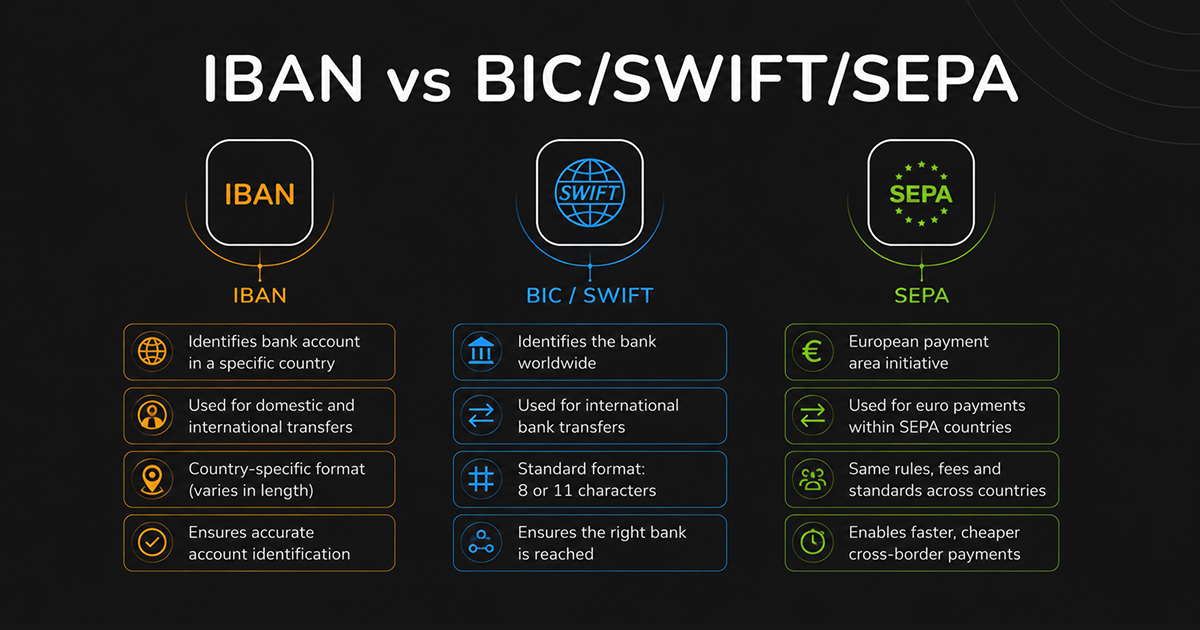
Global financial transactions rely on secure communication between banks, especially when money moves across borders. This guide explains the infrastructure that makes international transfers possible and reliable.
The purpose of this article is to explore how the SWIFT banking system operates, what it is used for, and how it supports global payments. It also covers key components such as SWIFT codes, system users, and how transactions are processed.
What is SWIFT?
SWIFT stands for the Society for Worldwide Interbank Financial Telecommunications. It is a global messaging network that allows financial institutions to communicate securely, primarily to send payment instructions.
The SWIFT meaning is closely tied to communication rather than money movement. The network does not hold funds or manage accounts. Instead, it transmits standardized messages between banks, enabling them to process transfers accurately.
The SWIFT system is owned by its members, which include over 11,500 financial institutions worldwide. It is headquartered in Belgium and overseen by major central banks, ensuring stability and compliance.
Key characteristics include:
- Secure exchange of financial messages
- Global coverage across more than 200 countries
- No direct handling of funds or settlements
History of SWIFT
SWIFT was developed to replace Telex, an older communication system that was slow and prone to errors. In 1973, it was founded in Brussels by 239 financial institutions from 15 countries.
The SWIFT banking network expanded rapidly, reaching over 500 institutions within four years. Today, it connects more than 11,000 institutions globally.
In 2024, the system handled an average of 53.3 million messages per day, highlighting its critical role in global finance.
Who uses the SWIFT system?
The SWIFT network is used by a wide range of financial and non-financial institutions to facilitate secure communication and international transactions.
Typical users of the SWIFT payment system include:
- Commercial banks for international transfers
- Central banks for financial operations and oversight
- Investment firms and brokerages
- Payment service providers and fintech companies
- Corporations handling cross-border payments
- Clearing houses and financial market infrastructures
These participants rely on SWIFT to ensure that payment instructions are delivered quickly and securely.
What are SWIFT codes?
SWIFT codes, also known as Bank Identifier Codes (BIC), are unique identifiers assigned to financial institutions. They are essential for routing messages within the SWIFT network.
A typical SWIFT code consists of 8 or 11 characters:
- First four characters: Bank or institution code
- Fifth and sixth characters: Country code
- Seventh and eighth characters: City code
- Last three characters: Optional branch identifier
These codes ensure that messages are directed to the correct institution, reducing errors in international transactions.
How does the SWIFT system work?
The SWIFT network operates by transmitting standardized messages between financial institutions. These messages contain instructions for transferring funds between accounts.
A SWIFT payment is not the transfer itself but the communication that enables it. Banks use SWIFT messages to coordinate the movement of funds through correspondent banking relationships.
Key points include:
- Messages are encrypted and securely transmitted
- Banks interpret instructions to execute transfers
- Funds move through linked accounts, not through SWIFT itself
This structure ensures accuracy and security in global financial communication.
SWIFT and sanctions
SWIFT plays an important role in enforcing international financial regulations. Although it operates as a neutral organization, it must comply with global legal requirements, including sanctions.
The SWIFT payments network has been used to restrict access for certain banks during geopolitical conflicts. For example, in 2022, several Russian banks were disconnected following international sanctions related to the Ukraine conflict.
Similar actions have been taken in the past, including restrictions on Iranian banks. Removing access to SWIFT limits a bank’s ability to participate in global financial systems.
How do SWIFT payments work with ABF Pay?
Modern payment platforms increasingly integrate SWIFT to expand their global reach. These solutions simplify international transfers for businesses and individuals.
With SWIFT money transfer capabilities, ABF Pay enables users to accept payments in over 37 currencies from more than 200 countries and send funds to nearly 70 destinations.
Additional features include:
- Fast and secure international transactions using established networks
- Support for multi-currency payments and global operations
- Alternative payment methods that may reduce reliance on traditional SWIFT transfers
The ABF Pay SWIFT code functions like any other BIC, identifying the institution within the network and ensuring accurate routing of transactions.
Conclusion
SWIFT remains a cornerstone of the global financial ecosystem, enabling secure communication between thousands of institutions worldwide. Its standardized messaging system ensures that international payments are processed efficiently and accurately.
Understanding the SWIFT financial system helps individuals and businesses navigate cross-border transactions with greater confidence. While SWIFT does not move money directly, its role in facilitating communication is essential.
As global payments continue to evolve, SWIFT will remain a key component of international banking infrastructure.
FAQ
How many banks are connected to the SWIFT network?
The SWIFT banking system connects over 11,000 financial institutions across more than 200 countries, making it one of the largest financial networks in the world.
Do all banks use SWIFT?
Not all banks use SWIFT, but most major financial institutions are connected. Smaller or regional banks may rely on intermediary banks that use the network.
Is SWIFT pay safe?
A SWIFT payment is considered highly secure due to encrypted messaging and strict verification protocols used by participating institutions.
How long do SWIFT payments take?
SWIFT payments typically take between one and five business days, depending on intermediary banks, currency conversions, and destination country.


Choose Your Path: Personal or Business Accounts
Whether you're looking to manage your personal finances or enhance your business operations, our platform has the right solution for you. Select a Personal Account for intuitive money management or a Business Account to empower your enterprise with advanced financial tools.